
Stop Your Lab Glass from Shattering
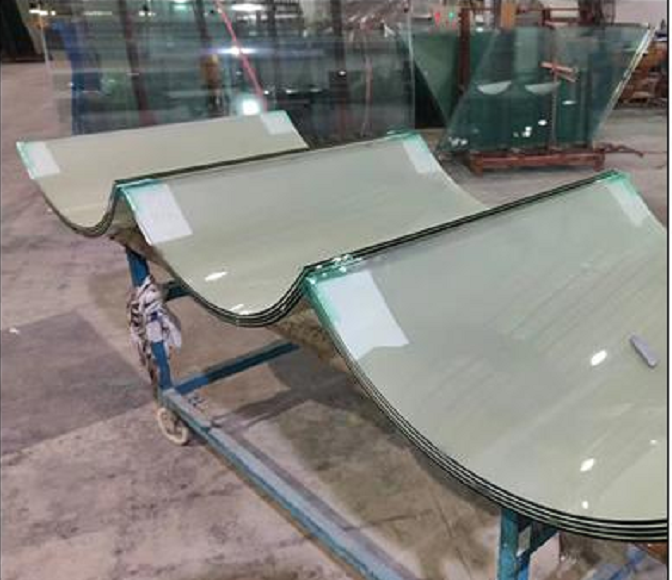
Nobody likes it when a piece of lab glassware cracks. It’s frustrating, it’s messy, and it usually happens at the worst possible moment. Most of the time, the culprit isn’t a clumsy hand—it’s internal stress that got trapped in the glass during cooling. To fix this, we use precision infrared (IR) heating in our batch furnaces to keep the annealing process exactly where it needs to be. The battle for 0.1°C Glass is finicky. There’s a very specific temperature where the glass is soft enough to let those internal stresses relax, but not so soft that the whole piece sags or loses its shape. If your furnace temperature jumps around by even a few degrees, you’re asking for trouble. You end up with “frozen-in” stress or, worse, thermal shock. That’s why we pair our IR elements with PID controllers that can track changes down to 0.1°C. It keeps the heat steady and stops the temperature from overshooting the mark. Why IR beats the old-school coils Think about standard resistive coils. They heat the air, and then the air has to heat the glass. It’s slow. There’s a lag. IR is different. It’s radiation. The energy hits the glass directly. We use short-wave emitters because they actually soak into the glass wall. This means the core of a thick flask gets just as hot as the outside. No cold spots, no surprises. The catch (and how to handle it) Here’s the thing: IR arrays pack a massive amount of heat into a tiny space. Because of that, your insulation has to be perfect. If your cabinet has a heat leak, the controller will spend all its time “hunting” for the right temperature. You’ll get those annoying oscillations that we’re trying to avoid in the first place. To keep things stable, you’ll want to wire these into a high-speed SCR. It handles the rapid switching needed to hold that 0.1°C line. When you get the IR elements right, the whole cooling process stops being a gamble. You just get glassware that actually holds up under a vacuum or through a hundred thermal cycles.