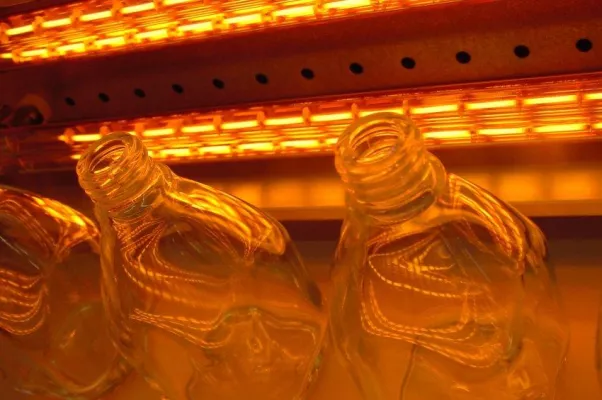
On the line, glass defects rarely scream. You find them after tempering as micro-cracks, after bending as optical distortion, after lamination as weak edges. More often than not, the culprit is right in the heating zone—uneven temperature, slow recovery, or drift that pushes the glass outside its thermal window.
What matters technically
We build our wholesale glass heating lamps around short-wave quartz infrared emitters. They dump energy straight into the glass surface, fast, with minimal convection. You get quick response—seconds to stabilize—so setpoints track tightly, cycle after cycle. The emitters are matched to industrial power profiles and standard mounting hardware, so they fit cleanly into retrofits and OEM heating modules: tempering furnaces, bending stations, lamination preheat zones. We size the active length and beam pattern to match the glass pass width, so the thermal field covers the target without scorching the edges or leaving the center cold.
Why this works on the floor
In glass processing, repeatable heat is what protects yield. Quartz infrared heating cuts the thermal lag, so the furnace or oven snaps back after loading. That keeps the tempering cycle consistent and keeps thermal stress fractures from creeping in. In lamination preheat, that same speed shortens the soak window, so you keep throughput up without forcing the adhesive into premature flow. The payoff is fewer optical defects, tighter flatness control, and less scrap from temperature swings. You also save energy, because the lamp heats on demand instead of idling a big chamber hot all day.
The details that make the difference
These lamps are tough, but they care about how you install them. Keep reflectors clean and aligned—misalignment shows up fast as banding across the glass. Check voltage and terminal rating at the fixture; over-voltage will shorten emitter life. Expect a short warm-up for the system to hit equilibrium. Plan line changeovers around that, or hold a standby setpoint. For long life, control dust and moisture in the heating zone. Treat them like engineered components, not generic bulbs, and they’ll run shift after shift.