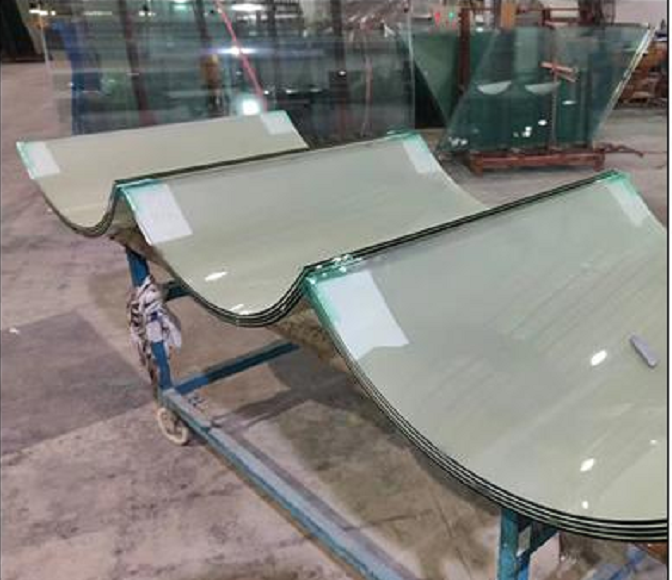
Out on the glass processing floor, paint drying is anything but cosmetic. It’s a thermal constraint that sets the pace—cycle time, scrap, and all. Convection ovens push heat through the air, and you end up with uneven cure, edge shadowing, and thermal stress that shows up later as breakage in tempering or bending. When the line is balanced for throughput, slow, inconsistent drying is the bottleneck you feel every shift. What matters, technically IR drying works because the energy hits the coating directly, not the room. We use short-wave quartz emitters—fast, direct radiant heat with high power density—so the paint hits cure temperature quickly without soaking the glass bulk. The payoff is a tight thermal profile across the sheet: peak temperature held within a narrow window, and a short hold time to finish crosslinking. That cuts the heat load on downstream equipment and keeps the process window compatible with low-E and other coated substrates. Here is why it fits the line. In tempering and bending, the furnace sets the pace, and paint drying has to keep up. IR modules cure in seconds, not minutes, so you run more square meters per hour without adding floor space. Uniform heating across the sheet cuts mottle and orange peel, and the fast response lets you track line speed tightly. Energy use drops because you’re heating the target, not the air, and maintenance stays manageable with solid quartz elements and straightforward reflector geometry. A few things to keep straight. IR performance hinges on distance, line speed, and the coating’s emissivity and thickness—change one and the profile shifts. You’ll tune the zones to hit target peak temperature without overshooting, and make sure your edge support isn’t creating localized shadowing. On retrofits, confirm electrical compatibility and mounting tolerances; some lines need minor guarding and thermal management tweaks to keep operators safe and to keep nearby components from running hot.