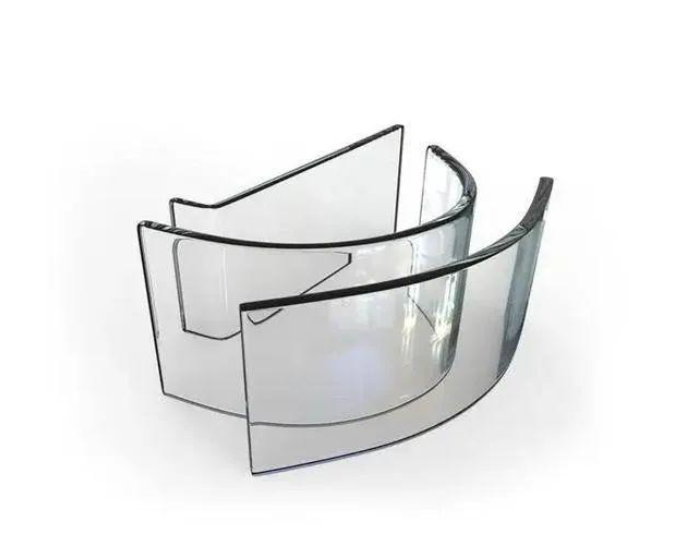
On the line, a tempering furnace or lamination press won’t forgive uneven heat. Hot spots and cold zones? They show up as thermal stress, edge cracks, warp, and optical distortion—fast. So we built the 400V industrial infrared lamp for glass work: repeatable, even heating where it counts, and less time guessing at the profile. Here’s what matters technically. The lamp runs 400V, which lines up with common industrial bus voltages and keeps branch-circuit current down. Short-wave infrared is tuned to how glass radiates—emissivity—so you get rapid, almost volumetric heating, while the reflector array shapes the flux. The thermal field stays tight across the width, with uniformity that’s easier to hold than in convection-heavy systems. That control is what keeps bow and optical distortion out of curved and coated parts. Why it plays in our world: in tempering, even heating keeps compressive stress consistent and lowers the risk of spontaneous fracture. In bending, it cuts down sag variance and makes radii repeatable. In lamination and coating drying, it pushes the cure front faster without boiling adhesives or driving solvents too hard. You end up with faster cycle recovery, fewer rejects, and lower kWh per part. The 400V input simplifies integration, and the modular design drops into existing fixtures with minimal line changes. A few shop-floor notes. Infrared is line-of-sight, so lamp placement and reflector alignment have to match glass thickness and the coating’s emissivity. Surface temperature uniformity improves when the gap and angle are set inside the process window. Plan a 15–20 minute commissioning run to dial in the profile, then lock it down. Expect higher initial output than low-temperature heaters, and plan for thermal shielding on nearby components.