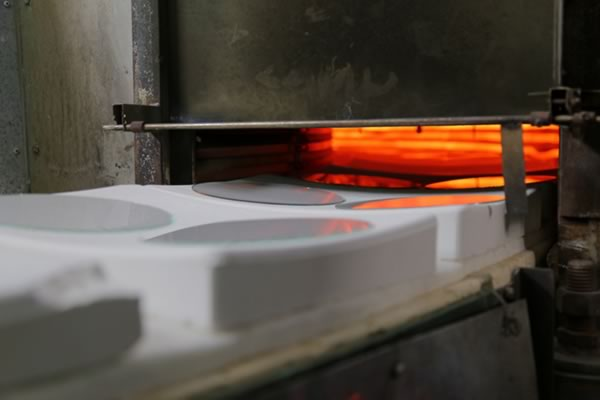
We built these infrared drying lamps for one reason: to dry Low-E glass coatings fast—without scorching them. It’s a tightrope walk. You have to hit the perfect temperature in milliseconds, then pull the heat back just as quick. Regular ovens? Too slow. Too harsh. They bake the air as much as the film, and that ruins the delicate metal layers. Our lamps are different. They hit the film with a shortwave, high-intensity pulse that dries the coating while keeping those sensitive layers safe. Here’s what’s going on under the hood. We run these lamps at high voltage because we need serious heat packed into a small space. That millisecond response isn’t brute force—it comes from the physics of the filament and the quartz envelope. A 400V supply paired with 2500W gives us the punch needed to flash-dry the film as the glass moves down the line. And the tube length? We size it to match your coating width, usually between 300mm and 1500mm. That way, you get even coverage across the whole surface—no hot spots, no cold streaks. One thing to keep in mind: these lamps run hot. Cooling isn’t optional. The reflector assembly needs solid airflow to keep output stable and to protect nearby parts from getting cooked. Now, the materials. We use a halogen-filled quartz tube because it keeps the filament steady under high heat and handles rapid on/off cycles without falling apart. The light peaks in the near-infrared band, which gets right into the wet film and heats it from the inside out. So the surface doesn’t overheat while the inside is still wet. A specialized reflector coating focuses the energy onto the glass and keeps stray heat from aging the surrounding equipment. And the connectors? We use standard R7s or Sk15, so the lamps drop right into your existing line. Wiring stays simple, and service stays fast. The body is tough, but let’s be honest—factory floors are rough. Treat it with care during install and maintenance. Why this matters on the line. Low-E coatings are thin and reactive. The lamp’s speed is the key. It dries so fast that oxygen doesn’t have time to get into the film during heating, so the metal layers stay protected from oxidation. The payoff? Consistent film quality, stable electrical performance, and repeatable yields. Plus, because the heat is focused, you use less energy than with full-chamber ovens. And the quick response lets you keep tight control when glass thickness or line speed changes. Just remember the trade-off: thermal management. Match your airflow and cooling to the wattage and duty cycle, and you’ll get clean, dry coatings with far fewer rejects.