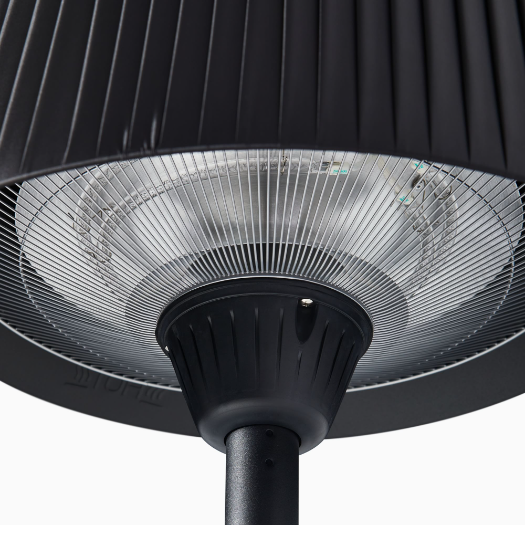
Getting the Light Right in Ceiling Heaters
Most industrial infrared heaters are basically heat cannons. They blast a wide spectrum of radiation into a room, which is fine for a warehouse, but it’s a nightmare for a bathroom or a nursery. That raw output creates a blinding glare that can actually mess with your eyes—and if you’ve got a baby in the room, that’s a huge no-go. The trick is shifting the peak. To keep things safe, we use special coatings on the quartz glass. Think of it like a pair of sunglasses for the heater. It blocks the harsh UV rays and that annoying bright light, but lets the long-wave infrared—the actual warmth—slide right through. You get the cozy feeling without that blinding “flash” you see in those cheap halogen tubes. Sure, we lose a bit of overall efficiency because we’re filtering the light, but it’s a trade-off worth making for the sake of your vision. Here’s the best part: we’re heating you, not the air. Because we use a specific wavelength, the warmth sinks into your skin instead of just baking the oxygen around you. You know that scratchy, dry-throat feeling you get in small rooms with old heaters? This stops that. Plus, we use soft-start controllers. It just means the power ramps up gently so you don’t accidentally trip your circuit breaker the second you flip the switch. But look, you can’t just throw these into any old ceiling. Since the coatings make the filament run a bit hotter, the housing has to be tough. We use aluminum or high-temp polymers because if the heat sink is too small, the whole fixture will warp. And a quick tip on the wiring: don’t cut corners. Use high-temp silicone wiring. It’s the only way to make sure your insulation doesn’t melt after a few months of heavy use.