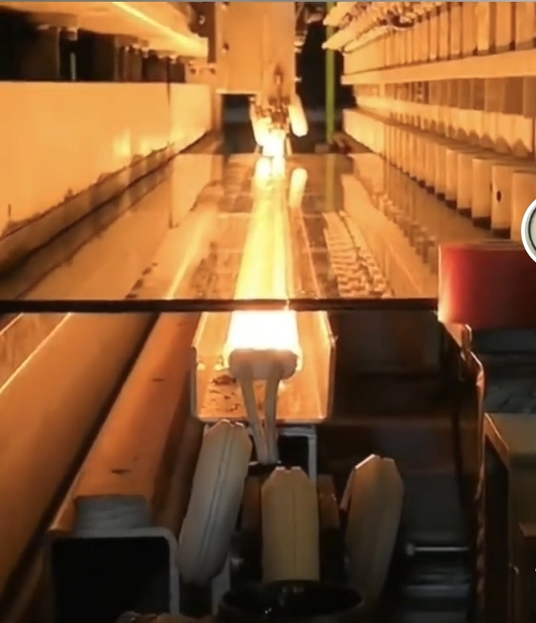
On the glass line, heat isn’t just a number on a pyrometer. It’s timing, it’s distribution, and it’s repeatability—every cycle, every shift. 유리 생산 라인에서 열은 단순히 열전대의 숫자가 아니다. 그것은 타이밍이며, 분포이고, 반복성이다—매 사이클, 매 교대마다.
A weak heating module shows up fast: uneven temper, edge compression that falls off, bubbles in lamination, or coating curing that drifts day to day. Swapping a heater eats hours, and every restart costs you good glass. We build heating spares that live in the real world of tempering ovens, bending furnaces, EVA/SGP/PVB lamination presses, and coating drying zones. 약한 히팅 모듈은 빠르게 드러난다: 불균일한 템퍼링, 떨어지는 가장자리 압축력, 라미네이션 내 기포 발생, 또는 일별로 변화하는 코팅 경화 문제. 히터 교체에는 수시간이 소요되며, 재가동 때마다 양품 유리가 손실된다. 우리는 템퍼링 오븐, 벤딩 퍼니스, EVA/SGP/PVB 라미네이션 프레스, 코팅 건조 구역 등 실제 현장에서 사용할 수 있는 히팅 예비품을 제작한다.
What matters, technically 기술적으로 중요한 점
We run short-wave quartz infrared emitters—fast response, predictable emissivity across the glass process windows. Typical ramp rates hit 10–15°C/s, which cuts recovery time after door cycles and reduces thermal shock on the element. 단파장 쿼츠 적외선 방출기를 사용한다—빠른 반응 속도와 유리 공정 영역 전반에 걸친 예측 가능한 방사율을 제공한다. 일반적인 상승 속도는 10–15°C/s로, 도어 열림 사이클 후 복구 시간을 줄이고 소자의 열충격을 완화한다.
Across the active face, temperature uniformity stays within ±2°C. That gives the glass a stable thermal field, so you get fewer thermal stress fractures and more consistent optical quality. Power density is tuned to 30–45 W/cm², sized to match zone length and airflow—enough heat flux without cooking hot spots. 작동면 전반에 걸쳐 온도 균일성은 ±2°C 이내를 유지한다. 이는 유리에 안정적인 열장을 제공하여 열 응력 균열을 줄이고 광학 품질의 일관성을 높인다. 전력 밀도는 30–45 W/cm²로 조정되며, 존 길이와 기류에 맞춰 설계되어 과열 지점 없이 적절한 열 플럭스를 제공한다.
Each module is rated for 5,000+ hours at continuous duty, with output drift under 5%. The connections are plant-tough: high-temp leads, solid terminals, and optional mounting brackets so you can swap in and get back online. 각 모듈은 연속 운전 시 5,000시간 이상을 보장하며 출력 드리프트는 5% 미만이다. 연결부는 공장 환경에 견딜 수 있도록 고온 리드선, 견고한 단자, 선택적 장착 브래킷을 갖추어 교체 후 즉시 가동할 수 있다.
Why it holds up in production 생산 현장에서 견디는 이유
In tempering, uniform heating keeps the quench even. Bow and warp stay in spec, and edge strength stays repeatable. 템퍼링 공정에서는 균일한 가열이 냉각을 고르게 유지한다. 휨과 뒤틀림이 규격 내에 유지되며, 가장자리 강도도 일정하게 반복된다.
In bending, the fast ramp buys you more shape repeats per shift—less time waiting for thermal stability. 벤딩 공정에서는 빠른 상승 속도가 교대당 더 많은 형상 반복을 가능하게 하여 열 안정성을 기다리는 시간을 줄인다.
In lamination, controlled heat keeps the polymer flow window consistent, which cuts entrapments and improves adhesion. 라미네이션에서는 제어된 열이 폴리머 유동 창을 일정하게 유지하여 기포 발생을 줄이고 접착력을 향상시킨다.
In coating drying, the tight profile shortens the zone and lowers gas draw. Fewer rejects, fewer line interruptions, and less energy per square meter because the heat is delivered when you need it, not wasted in warm-up. 코팅 건조에서는 밀도 높은 프로파일이 존 길이를 단축하고 가스 소모를 줄인다. 불량률 감소, 라인 중단 최소화, 그리고 예열 시 낭비 없이 필요한 순간에 열을 공급해 단위 면적당 에너지 사용량이 줄어든다.
The details that save you headaches 문제를 줄여주는 세부 사항
These are drop-in replacements for common OEM footprints, but clearances and terminal orientation can vary by machine year and revision. Measure the slot, confirm voltage and phase, and match the connector type before you order. 이는 일반적인 OEM 규격의 드롭인 교체품이지만, 여유 공간과 단자 방향은 기계 연식 및 개정판에 따라 다를 수 있다. 슬롯 치수, 전압 및 상수 확인, 그리고 커넥터 타입을 주문 전에 반드시 확인해야 한다.
For best uniformity, pair the new module with a clean reflector and verify airflow across the zone—convection helps stabilize the glass surface temperature. 최상의 균일성을 위해 새 모듈을 청결한 반사판과 함께 사용하며 존 전체의 기류를 확인해야 한다—대류가 유리 표면 온도를 안정시키는 데 도움을 준다.
You can expect a 15–25% reduction in warm-up time and measurable gains in temperature stability. Build your spares list around your peak changeover windows so you’re ready when the line is counting on it. 예열 시간은 15–25% 단축되며 온도 안정성도 눈에 띄게 향상된다. 교체가 집중되는 피크 시간대에 맞춰 예비 부품 목록을 준비해 두면 라인이 가동 중단 없이 원활히 운영될 수 있다.